2026 Best Formaldehyde Project Suppliers for Global Buyers
Selecting reliable suppliers for a Formadehyde Project requires more than comparing equipment prices. In 2026, global buyers should examine process design, engineering experience, safety systems, and documented delivery performance. A capable supplier should explain the complete route, from raw-material handling to product storage and emissions control. Details matter.
This guide highlights suppliers with relevant project records, technical teams, and practical support for international customers. Evaluation should include reactor configuration, methanol conversion efficiency, catalyst service, heat recovery, automation, and maintenance access. Buyers should also request references from comparable plants, not generic corporate testimonials. That gap matters.
Reliable suppliers communicate clearly about capacity, utilities, site conditions, training, spare parts, and commissioning schedules. They should provide traceable specifications and realistic performance guarantees. Compliance with applicable environmental, occupational-safety, transport, and construction requirements must remain central throughout procurement. A polished proposal is not enough.
Some projects fail through small omissions, such as underestimated cooling demand or unclear battery limits. These issues deserve careful review before contract signing. We also recognize that supplier rankings can change as technologies, regulations, and regional costs evolve. Therefore, this overview is a practical starting point, not a substitute for independent technical and legal due diligence. Global buyers should compare lifecycle value, technical transparency, after-sales responsiveness, and risk control before choosing a partner. Not every quote qualifies.
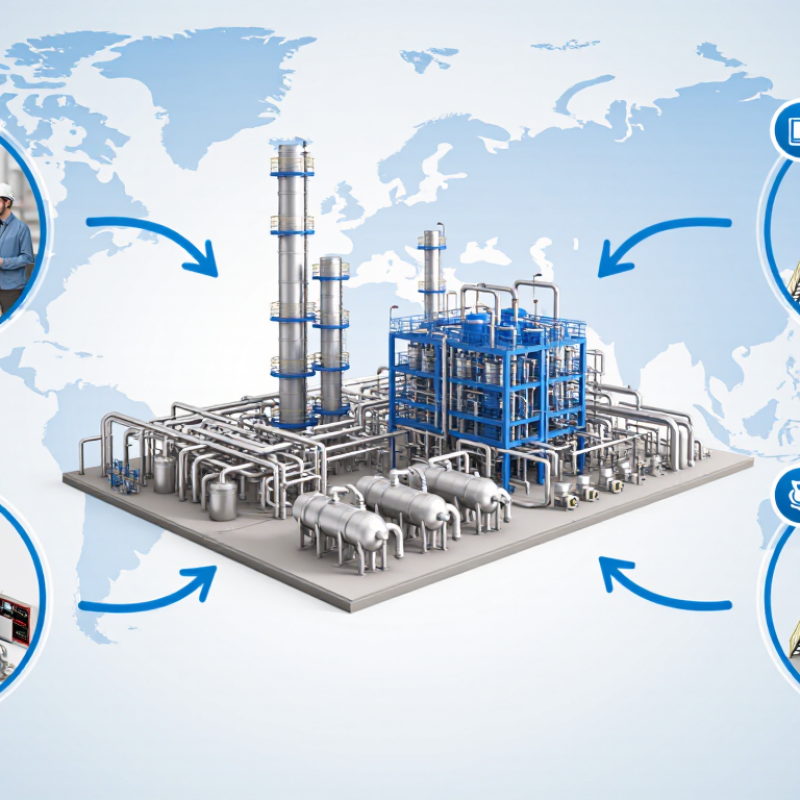
Formaldehyde Project Suppliers: Scope, Systems, and Services
2026 Best Formaldehyde Project Suppliers for Global Buyers
Formaldehyde project suppliers now provide more than equipment packages. Their scope may include FEED studies, reactor design, absorption towers, storage systems, emission controls, utilities, commissioning, and operator training. Recent 2024 market assessments project global formaldehyde demand to grow at about 5% annually through 2030. This growth increases pressure on suppliers to deliver stable output, safer systems, and measurable energy performance.
A capable supplier should explain methanol conversion efficiency, absorber design, tail-gas treatment, wastewater handling, and control-system logic. The WHO Guidelines for Indoor Air Quality set a formaldehyde guideline of 0.1 mg/m³ for a 30-minute average. IARC classifies formaldehyde as carcinogenic to humans. Therefore, reliable projects need continuous monitoring, proper ventilation, alarm testing, and documented maintenance procedures. Paper compliance is not enough. Field conditions can expose weak assumptions.
Tips: Request a line-by-line scope matrix before signing. Compare guaranteed capacity, utility consumption, emission limits, spare parts, and response times. Ask for anonymized operating references and commissioning records. A low-price package may hide incomplete civil works or uncertain performance guarantees. No supplier is perfect. Leave room for independent audits, operator feedback, and design changes after the first operating season.
How to Define Technical, Safety, and Regulatory Requirements
For global buyers, defining a formaldehyde project starts with measurable technical requirements. State the required capacity, product concentration, operating hours, feedstock quality, and acceptable temperature range. Specify equipment materials that resist corrosion and formaldehyde exposure. Include reactor volume, storage capacity, energy consumption, and expected emission limits. Small details matter.
Ask suppliers to provide process-flow diagrams, mass balances, equipment lists, and control-system descriptions. Require calibrated gas detectors, automatic shutdown functions, sealed transfer lines, and suitable ventilation. Storage tanks should include level alarms, secondary containment, and controlled access. Emergency showers and eyewash stations must be placed near handling areas. Safety data sheets should match the actual product and concentration.
Regulatory requirements need a country-by-country review. Confirm permits, worker-exposure limits, transport rules, wastewater controls, and reporting duties before signing a contract. Request evidence of factory testing, inspection records, material certificates, and commissioning procedures. Independent testing can strengthen confidence. It also reveals weak assumptions.
A practical supplier should explain how risks are reduced, not merely promise compliance. FAT and SAT procedures should define acceptance criteria, sampling methods, and corrective actions. Technical training must cover leaks, alarms, maintenance, and emergency response. Requirements often change after site surveys. That is normal, but undocumented changes create disputes. A rushed specification may look efficient. It can become expensive later.
How to Evaluate Supplier Expertise, Capacity, and Certifications
For formaldehyde projects, supplier expertise must appear in documents, not only presentations. Request three comparable project references, including capacity, feedstock, commissioning date, and actual operating hours. Experienced teams should explain reactor selection, methanol conversion, heat recovery, absorption, and emission control in clear terms. A site visit can reveal details that brochures hide. Sometimes, the cleanest factory has the weakest records.
Capacity deserves careful testing. Compare proposed output with verified production, equipment lead times, utility demand, and spare-parts availability. Ask for a complete mass and energy balance. Check whether the supplier has managed start-up problems, catalyst replacement, and wastewater treatment. The World Health Organization’s indoor-air guideline sets 0.1 mg/m³ for formaldehyde over 30 minutes. IARC classifies formaldehyde as carcinogenic to humans. These findings make process safety and containment practical requirements, not marketing language.
Tips: Verify ISO 9001, ISO 14001, and ISO 45001 certificates through the issuing body. Confirm their scope, validity, and audited location. Request factory acceptance test records and independent emission data. Certifications help, but they do not replace technical judgment. Review contracts with an experienced process engineer. A spreadsheet can still lie. Suppliers should also provide training plans, emergency procedures, calibration records, and performance guarantees linked to measurable test conditions.
How to Compare Pricing, Contracts, Timelines, and Support
Choosing a formaldehyde project supplier requires more than comparing the lowest quotation. Request a line-by-line price covering engineering, equipment, testing, packaging, freight, installation, training, and spare parts. Ask whether taxes, insurance, and commissioning are included. A cheap proposal can become expensive at the port. Compare equivalent capacity and specifications, not only the headline price. Require quality records, relevant project references, and evidence of qualified personnel. Visit a completed site when practical. Photos are helpful, but limited.
Contracts should define feedstock assumptions, performance guarantees, acceptance tests, payment milestones, warranty scope, and lawful environmental requirements. Use measurable deadlines for design approval, fabrication, delivery, installation, and startup. Clarify delay remedies and responsibility for customs documents. Timelines often slip when buyer approvals arrive late. Still, suppliers should show realistic schedules with buffer days, not optimistic promises. I have found that weekly progress reports expose small problems before costly disputes. Yet reporting cannot replace technical review.
Tips: Ask for two comparable offers using one specification sheet. Check references in similar climates and operating conditions. Confirm local service coverage and response times in writing. Keep a contingency budget for modifications and training. Do not select on price alone. That is tempting, but incomplete.
2026 Best Formaldehyde Project Suppliers for Global Buyers
How to compare pricing, contracts, timelines, and support using indicative industry planning benchmarks
Pricing Normalize equipment scope, engineering, freight, installation, commissioning, taxes, and spare parts before comparing offers.
Contracts Check milestone payments, delivery terms, performance guarantees, liquidated damages, warranty coverage, and change-order rules.
Timelines Typical greenfield formaldehyde projects require roughly 18–30 months from basic engineering through commissioning, depending on scope and site readiness.
Support Evaluate commissioning personnel, operator training, remote response time, local service coverage, documentation, and spare-parts availability.
Benchmark interpretation: indicative planning ranges for a conventional industrial formaldehyde project, not quotations from any specific supplier. Actual schedules vary with capacity, technology package, permitting, site infrastructure, logistics, and local regulations.
How Global Buyers Can Verify and Select the Right Supplier
Choosing a formaldehyde project supplier requires more than comparing prices. Global buyers should verify technical experience, production capacity, and project history.
Ask for completed project references with contact details. Request process flow diagrams, equipment lists, material specifications, and commissioning records.
Clear documents reveal practical knowledge.
A remote presentation is not enough. Arrange a video inspection or an independent site audit. Check welding quality, instrument calibration, safety controls, and spare-parts storage. Ask engineers to explain how they manage temperature, pressure, emissions, and product consistency. Their answers should be specific, not rehearsed. Review laboratory test reports from recognized, independent facilities. Confirm that testing methods match the destination market’s requirements.
Check the supplier’s legal registration, quality system, export experience, and after-sales capacity. Compare warranty terms, response times, training plans, and installation responsibilities. Put technical limits into the contract, including acceptance tests and measurable performance targets. Ask how delays, damaged equipment, or design changes are handled. Verify payment details through official channels.
Do not trust polished brochures alone. A lower bid may exclude controls, installation, or essential safety equipment. No supplier is perfect. Some teams communicate well but document poorly; others have strong engineering but weak field support. I would record these weaknesses openly and request corrective actions before signing. Small gaps become expensive during commissioning. Choose evidence over confidence.