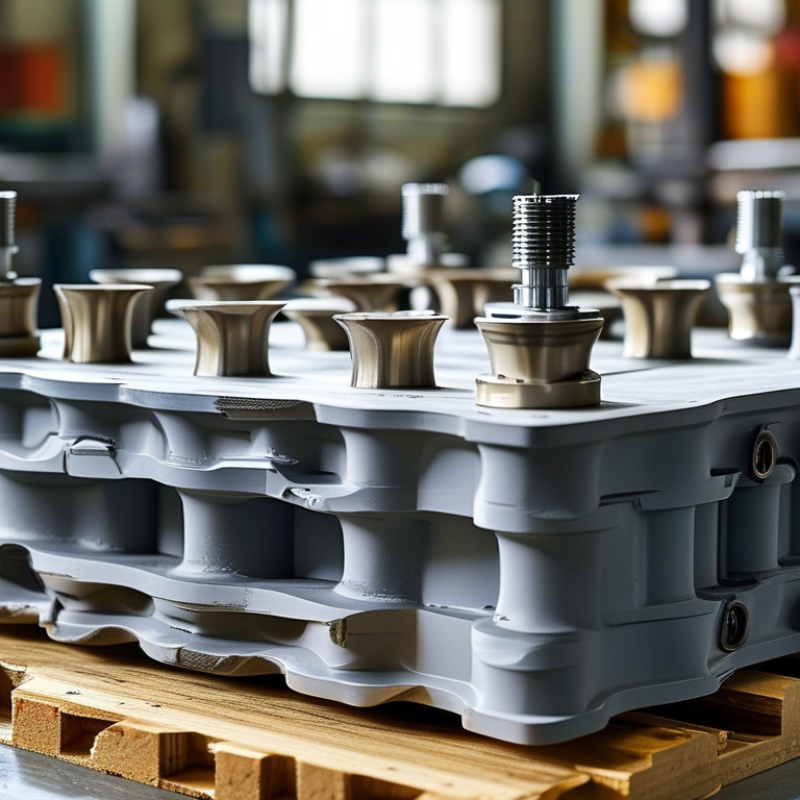
Why Choose SMC Molds for Your Manufacturing Needs?
In the realm of manufacturing, selecting the right tools is crucial. SMC molds offer a unique combination of durability and versatility. They cater to a diverse range of applications, making them highly sought after in various industries.
Many manufacturers have found success with SMC mold technology. These molds deliver high precision and consistent quality. Their lightweight nature also contributes to efficiency during the production process. However, it’s essential to consider specific needs. Not every project may benefit from SMC molds.
Procuring SMC molds requires careful thought. Design intricacies and production goals must align. This consideration fosters better results. Ultimately, understanding the advantages and limitations of SMC molds can lead to smarter manufacturing decisions. Explore how SMC molds can elevate your production outcomes.
Benefits of SMC Molds in High-Volume Production and Cost Efficiency
SMC molds have gained popularity in high-volume production due to their cost efficiency and versatility. A recent industry report indicated that the use of SMC components can reduce production costs by up to 30%. This significant saving comes from fewer manufacturing steps and decreased labor intensity. The process allows shorter cycle times, making it ideal for large-scale production runs.
Moreover, SMC molds enable manufacturers to create complex shapes with high precision, which is crucial in industries like automotive and aerospace. The superior mechanical properties of SMC materials contribute to lightweight designs without compromising strength. A study by the Composite Industry Association noted that parts made with SMC can be 25% lighter compared to traditional materials, leading to fuel savings in transportation.
It is essential to consider the specific requirements of your production line. Sometimes, SMC may not be the best option for low-volume projects. Evaluate your production needs carefully. Analyze not just cost, but also the potential for innovation. Using SMC molds can lead to enhanced designs that improve product performance and user experience.
Key Properties of SMC Materials That Enhance Mold Performance
SMC (Sheet Molding Compound) materials possess unique properties that significantly enhance mold performance in manufacturing. These materials are renowned for their excellent mechanical properties. According to industry reports, SMC exhibits a tensile strength of up to 100 MPa, along with high impact resistance. This strength ensures that molds can maintain their shape and function under stress, leading to fewer failures during production.
Another compelling aspect of SMC is its lightweight nature. This property allows for easier handling and transportation of molds. Data suggests that SMC can be approximately 25-30% lighter than traditional materials. However, while this offers efficiency advantages, it also raises concerns about durability over time. Manufacturers need to routinely evaluate the long-term performance of SMC molds to ensure they meet evolving production demands.
Additionally, SMC materials have superior thermal and chemical resistance. Withstanding temperatures exceeding 180°C, these properties make SMC suitable for various applications, even in harsh environments. Yet, transitioning to SMC from conventional materials may require adjustments in design and production techniques. Careful consideration is necessary to unlock their full potential in manufacturing processes.
Why Choose SMC Molds for Your Manufacturing Needs?
| Property | Description | Benefit |
| High Strength | SMC materials offer excellent tensile and compressive strength. | Enables production of durable molds that withstand extreme conditions. |
| Corrosion Resistance | SMC is inherently resistant to a range of chemicals and moisture. | Increases mold lifespan and reduces maintenance costs. |
| Lightweight | SMC molds are significantly lighter than traditional materials. | Easier handling and installation, leading to efficient production processes. |
| Thermal Insulation | SMC materials provide excellent resistance to heat transfer. | Helps maintain consistent temperatures during molding processes. |
| Electrical Insulation | SMC can be formulated to provide high electrical insulation properties. | Ideal for electrical components, enhancing safety and performance. |
Comparative Durability and Strength of SMC Molds Versus Traditional Options
SMC molds are gaining attention for their impressive durability and strength compared to traditional options. Manufacturers are increasingly choosing SMC over metal and wood molds. The enhanced resistance to wear and tear translates into a longer lifespan. This means fewer replacements and maintenance issues in the long run. Companies can save significant costs by opting for SMC molds.
When selecting molds, consider the specific requirements of your production process. The choice of material impacts not only the product quality but also operational efficiency. SMC molds offer a unique combination of lightweight design and structural integrity. They can withstand high temperatures and pressures, making them suitable for a variety of applications.
Reflect on your current molding methods. Traditional options might have served well, but they may not be as efficient today. The transition to SMC technology can seem challenging. However, the benefits of improved durability and strength often outweigh initial concerns. Conducting thorough research into SMC properties can provide deeper insights into its advantages.
Comparative Durability and Strength of SMC Molds Versus Traditional Options
SMC Molds in the Automotive Industry: A Case for Innovation and Quality
In the automotive industry, SMC molds are increasingly recognized for their innovative capabilities. These molds offer significant advantages in weight reduction and production efficiency. According to a recent industry report, vehicles made with SMC parts can be up to 40% lighter than those using traditional materials. This reduction in weight directly correlates with improved fuel efficiency and lower emissions, which are critical for meeting stringent environmental regulations.
The durability and versatility of SMC materials make them ideal for various automotive applications. A survey indicates that more than 70% of manufacturers are adopting SMC for components like dashboard assemblies and body panels. These materials provide not only structural integrity but also enhanced aesthetic appeal. Despite these benefits, some challenges remain. For instance, the initial tooling costs for SMC molds can be higher than for other materials. Manufacturers must weigh these costs against the long-term savings in production and fuel efficiency.
Moreover, the learning curve for working with SMC can be steep. Engineers often need additional training to optimize the molding processes. The complexity of the materials and their processing can lead to trial and error. Nevertheless, the potential rewards—such as enhanced performance and sustainability—can make the investment worthwhile for many automotive manufacturers.
Sustainability in Manufacturing: The Environmental Impact of SMC Molds
Sustainability is a pressing issue in manufacturing. The use of SMC molds offers a pathway for reducing environmental impact. According to a 2021 report by the Global Environmental Institute, SMC technology can reduce waste by up to 30%. This reduction is crucial in a world where manufacturing processes contribute significantly to landfills.
SMC molds also utilize recycled materials. Approximately 25% of SMC composite materials are derived from post-consumer waste. This not only conserves resources but also lowers the carbon footprint of production. Environmental benefits create a ripple effect, encouraging industries to embrace sustainable practices. However, the challenge lies in ensuring that the manufacturing processes align with the recycling capabilities of SMC materials.
The energy efficiency of SMC processes is another area of focus. A study by the International Energy Agency notes that switching to SMC can decrease energy consumption by roughly 20% compared to traditional molding methods. Yet, the industry still needs to explore innovative technologies to further enhance these efficiencies. Manufacturing facilities must continuously evaluate their practices for improvement. The journey towards sustainability is ongoing, and every small change matters.