
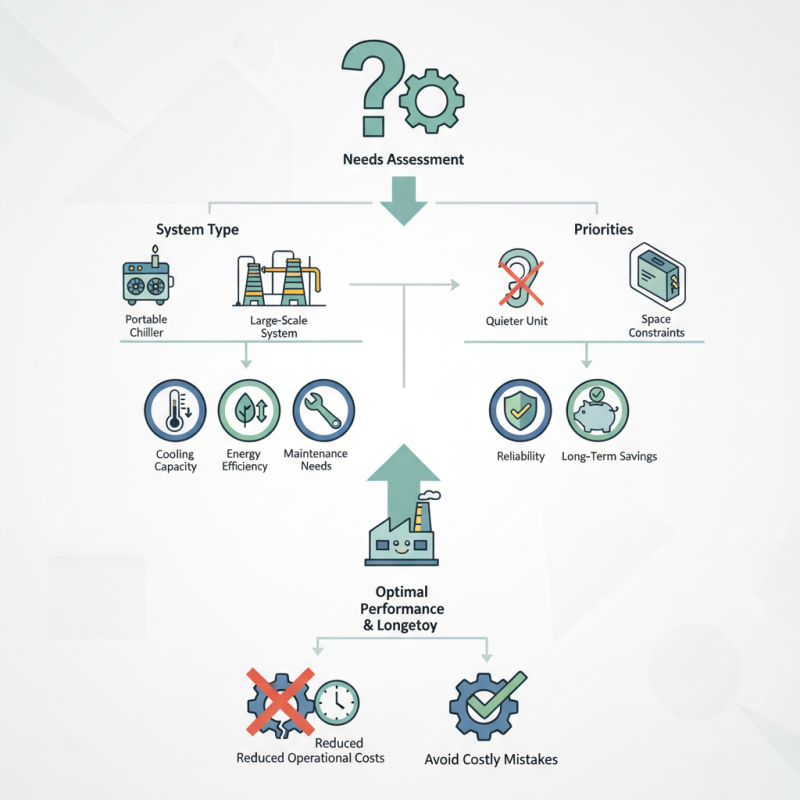
Choosing the right Chiller Series for your specific needs is essential. It greatly impacts efficiency and operational costs. A suitable chiller series ensures optimal performance and longevity. Understanding your requirements can be challenging.
There are many factors to consider. For instance, do you need a portable unit or a large-scale system? Each chiller series has unique features. Evaluating cooling capacity, energy efficiency, and maintenance needs is crucial. You may want a quieter unit or one that fits a tight space.
Mistakes in selection can be costly. Many choose a chiller series based solely on price. However, reliability and efficiency matter more in the long run. Reflecting on your real needs can save time and resources. Don’t rush the decision.
When selecting a chiller system, it's crucial to understand the different types available on the market. There are air-cooled and water-cooled chillers, each with its own benefits and drawbacks. Air-cooled chillers are easier to install and maintain. They are perfect for smaller spaces. However, they might struggle in extreme heat.
On the other hand, water-cooled chillers are better suited for larger operations. They are more efficient and often quieter. However, they require a cooling tower and additional plumbing. This can complicate installation.
**Tips:** Assess your space and budget. Think about future growth and energy costs. It's vital to choose a chiller that balances efficiency with your needs. Don't rush this decision. Research thoroughly to avoid regrets down the line. Consult experts if necessary. Consider how maintenance will affect your operations. Always keep in mind the long-term implications.

Choosing the right chiller series for your cooling needs is crucial. Understanding your cooling requirements is the first step. Factors like the size of the space, heat load, and application type play significant roles. For instance, the climate can greatly influence the efficiency of a chiller. According to the American Society of Heating, Refrigerating and Air-Conditioning Engineers (ASHRAE), nearly 50% of energy consumed in commercial buildings is due to heating and cooling.
Heat load calculations are vital. This involves assessing the amount of heat generated by equipment, lighting, and even human activity. Industry reports suggest a 10% margin for increase, as conditions may vary over time. Many users overlook this, leading to underperformance. Ignoring external temperatures can also result in selecting an inadequate unit. Factors such as humidity levels and airflow also need attention.
It's easy to overspecify a unit, leading to energy waste. A chiller that is overcapacity may cycle on and off frequently, increasing wear and tear. A balance is necessary. Users should also consider maintenance requirements. A poorly maintained chiller can have a significant impact on efficiency. Data indicates that regular maintenance can boost performance by up to 20%. Thus, aligning your chiller choice with these considerations is essential for optimal performance.
When choosing a chiller, energy efficiency is key. Look at the Energy Efficiency Ratio (EER) and the coefficient of performance (COP). These ratings help indicate how well a unit converts energy into cooling output. According to the U.S. Department of Energy, a more efficient chiller can lower operating costs by up to 30%. This reduction can significantly impact long-term savings.
Operating costs also depend on the chiller's size and maintenance requirements. A chiller that's too large or too small can lead to wasted energy. Seasonal Energy Efficiency Ratio (SEER) ratings are crucial here. They show efficiency under specific temperature ranges. Ignoring these ratings may lead to unexpected expenses. Regular maintenance can enhance performance. It keeps the system running efficiently.
Consider the average lifespan of chillers. Many devices last around 15 to 20 years. Upgrading to an efficient model early can lead to substantial savings. The initial investment might seem high, but operational savings can outweigh upfront costs over time. Some studies suggest that the return on investment (ROI) for efficient chillers can be realized in three to five years.
Choosing the right chiller series involves understanding key features and technologies. Efficiency is a top priority. According to industry reports, high-efficiency chillers can save up to 30% in energy costs. Variable-speed compressors are a vital feature. They allow chillers to adjust their output based on cooling demand. This technology ensures optimal performance without wasting energy.
Cooling capacity is another essential consideration. Chillers come in various sizes. Sizing a chiller correctly can prevent issues like short cycling, affecting system longevity. A study by the Cooling Industry Association found that improper sizing leads to a 15% drop in performance.
Cooling technology is evolving rapidly. Some models employ advanced controls for better monitoring. Features like remote access enable real-time adjustments. However, these technologies can increase initial investment costs. Balancing performance and investment is crucial. It requires careful analysis and reflection on long-term benefits. Choices made now impact operational efficiency in the future. Understanding these features enables better decision-making.
When selecting a chiller series, comparing various brands and models is crucial. According to recent industry reports, over 70% of users prioritize energy efficiency. This is vital because chillers can consume a significant portion of operational energy. Energy-efficient models can reduce consumption by up to 30%.
Performance metrics should also be closely examined. The American Society of Heating, Refrigerating and Air-Conditioning Engineers (ASHRAE) indicates that temperature consistency affects cooling efficiency. Models with advanced control systems often outperform standard models. Users report that consistency can improve overall system reliability, leading to fewer breakdowns.
A common mistake is focusing solely on price. Quality and longevity are critical for cost-effectiveness. Some manufacturers offer warranties extending beyond five years, which can indicate reliability. Nevertheless, users should evaluate whether that warranty covers all components. It’s essential to look deeper than surface-level specifications and ensure that the chiller meets specific operational needs. Such thorough assessments often reveal the real value behind different models and brands.


All of Hapco's formulations are completely free of Mercury.

Hapco has been in business for over 50 years!

*NOTICE* Hapco will be will be closed on Monday, May 26th, in observance of Memorial Day. |
| Cookie | Duration | Description |
|---|---|---|
| cookielawinfo-checkbox-analytics | 11 months | This cookie is set by GDPR Cookie Consent plugin. The cookie is used to store the user consent for the cookies in the category "Analytics". |
| cookielawinfo-checkbox-functional | 11 months | The cookie is set by GDPR cookie consent to record the user consent for the cookies in the category "Functional". |
| cookielawinfo-checkbox-necessary | 11 months | This cookie is set by GDPR Cookie Consent plugin. The cookies is used to store the user consent for the cookies in the category "Necessary". |
| cookielawinfo-checkbox-others | 11 months | This cookie is set by GDPR Cookie Consent plugin. The cookie is used to store the user consent for the cookies in the category "Other. |
| cookielawinfo-checkbox-performance | 11 months | This cookie is set by GDPR Cookie Consent plugin. The cookie is used to store the user consent for the cookies in the category "Performance". |
| viewed_cookie_policy | 11 months | The cookie is set by the GDPR Cookie Consent plugin and is used to store whether or not user has consented to the use of cookies. It does not store any personal data. |