What is Die Casting Molds and How Do They Work?
Die Casting Molds play a crucial role in the manufacturing industry. These molds help create precise metal components efficiently. Leading expert in the field, John Smith, once said, "Die casting molds are the backbone of high-quality production." This statement highlights their importance.
The process involves injecting molten metal into a mold cavity. Precision is key in this operation. A slight error can result in defective parts. Understanding the intricacies of die casting molds is essential for manufacturers. They must consider factors like material choice and temperature control.
Yet, challenges abound. Maintaining mold quality over time can be tough. Companies often face wear and tear problems. This reality sparks conversations about innovation and improvements. Exploring the complexities of Die Casting Molds can reveal both advantages and areas to refine.
What is Die Casting?
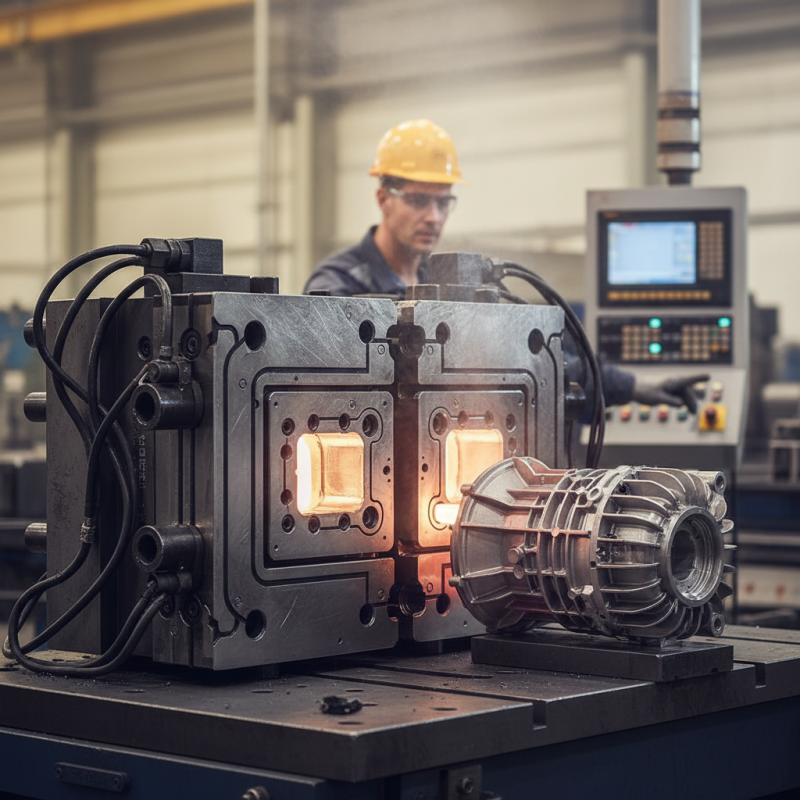
Die casting is a manufacturing process that creates metal parts. Molten metal is forced into a mold at high pressure. This process allows for precise shapes and intricate designs. The molds used in die casting are usually made from hardened steel or iron, which can withstand high temperatures. They are designed to produce a specific part repeatedly and consistently.
The main advantage of die casting is its ability to produce complex shapes with excellent surface finish. However, it is not for every project. Sometimes, achieving the desired finish might be challenging. Molds can wear out over time, leading to imperfections in production. This requires meticulous maintenance, which can be a drawback.
In this method, the cooling phase is crucial. If metal cools too quickly or slowly, it can affect part quality. If the temperature isn't regulated, defects may arise. Monitoring the cooling process is vital but not always straightforward. This can lead to unexpected results and rework, adding complexity to the overall operation. Balancing efficiency and accuracy is a constant challenge in die casting.
Types of Die Casting Molds
Die casting molds play a crucial role in manufacturing processes, particularly in the production of metal parts. There are various types of die casting molds, each serving different purposes. The two primary categories are single cavity and multiple cavity molds. Single cavity molds create one part per cycle, making them ideal for smaller production runs. In contrast, multiple cavity molds can produce several parts at once, significantly increasing efficiency during larger production volumes.
Another type worth noting is the moving die mold. This design allows for easier ejection of complex shapes. Additionally, this mold type minimizes the need for undercuts, reducing potential production issues. Reports indicate that the efficiency of multiple cavity molds can lead to a 30% reduction in manufacturing time. Thus, choosing the right mold is essential to enhancing productivity.
Tips: Always consider the material being used. Different metals have varying melting points, affecting the mold's design. Ensure you regularly inspect molds for wear. Even slight imperfections can lead to costly defects. Testing prototypes before full-scale production can save time and resources in the long run. It's a good practice to maintain an iterative feedback loop during the development phase.
What is Die Casting Molds and How Do They Work? - Types of Die Casting Molds
| Type of Die Casting Mold | Material Used | Typical Applications | Advantages | Disadvantages |
| Single Cavity Mold | Steel, Aluminum | Automobile Parts, Appliances | High Precision, Cost-Effective for Low Volume | Limited to One Part Per Cycle |
| Multi Cavity Mold | Steel | Consumer Products, Fasteners | Increased Production Efficiency | Higher Tooling Costs |
| Combination Mold | Aluminum, Steel | Complex Assemblies, Customized Parts | Versatility in Production | Complex Design and Higher Costs |
| Cold Chamber Mold | Aluminum | High Melting Point Alloys, Heavy Machinery Parts | Suitable for High Temperature Materials | Lower Production Speed |
| Hot Chamber Mold | Zinc, Magnesium | Low Melting Point Alloys, Electronic Housings | Faster Cycle Times | Not Suitable for High Melting Point Alloys |
Components of Die Casting Molds
Die casting molds are essential tools in manufacturing. They are used to shape metal objects with precision. A typical die casting mold consists of several components, each serving a specific purpose.
The mold itself is divided into two halves: the cover and the ejector half. The cover half holds the molten metal. The ejector half contains ejector pins that push out the finished product. There are also cooling channels within the mold to help control the temperature. These channels ensure the metal solidifies evenly, which is vital for high-quality products.
Tip: Make sure to regularly inspect the cooling channels for blockages. A blockage can lead to uneven cooling and defects in the final product.
Another important component is the sprue, through which molten metal enters the mold. Proper sizing of the sprue is crucial. If it’s too small, it may restrict flow. On the other hand, if it’s too large, it may waste material.
Tip: Keep in mind that experimenting with sprue size can lead to unexpected outcomes. Adjusting the design and testing can result in better efficiency.
The Die Casting Process Explained
Die casting is a metal casting process. It employs high pressure to inject molten metal into a mold. The die, or mold, must be precisely designed. This precision ensures the final product meets specific tolerances and finishes.
The die casting process involves several key steps. First, the metal is melted. Once it reaches the right temperature, it's injected into the mold. The pressure maintains its shape as it cools. After the metal hardens, the mold opens, and the casting is ejected. Sometimes, imperfections appear, like air bubbles or surface defects. These issues require careful inspection and adjustment in the process.
Time is crucial in die casting. Quick cycles can lead to more efficient production, but mistakes can happen. Occasionally, fine-tuning is necessary for optimal performance. Each step in the casting process impacts the quality of the final product. Attention to detail is vital, even when striving for speed.
Die Casting Production Volumes by Material Type
Advantages and Applications of Die Casting Molds
Die casting molds play a pivotal role in modern manufacturing. They are essential for creating intricate metal parts quickly and efficiently. The die casting process involves injecting molten metal into a mold under high pressure. This method enables the production of complex shapes with high dimensional accuracy. According to a recent industry report, die casting can achieve tolerances of ±0.1 mm or less, which is impressive for mass production.
The advantages of using die casting molds are significant. They allow for faster production cycles. Some facilities report cycle times of just 15 to 30 seconds per part. This rapid output reduces lead times and increases productivity. Additionally, die-cast components often have superior mechanical properties. They are highly durable and can withstand harsh environments. Moreover, industries such as automotive and aerospace increasingly rely on die cast components. In fact, about 80% of new light vehicle engine components are produced using this method, according to market analytics.
However, challenges exist in die casting. The initial investment for molds can be high. This may deter smaller manufacturers from entering the market. Furthermore, issues like air entrapment can lead to defects in parts. Such imperfections require careful monitoring and testing throughout the production process. Continuous improvements in mold technology are essential to address these challenges effectively. Industries must weigh the benefits against the limitations to optimize their production capabilities.