Essential Tips for Understanding Rigid Polyol Applications?
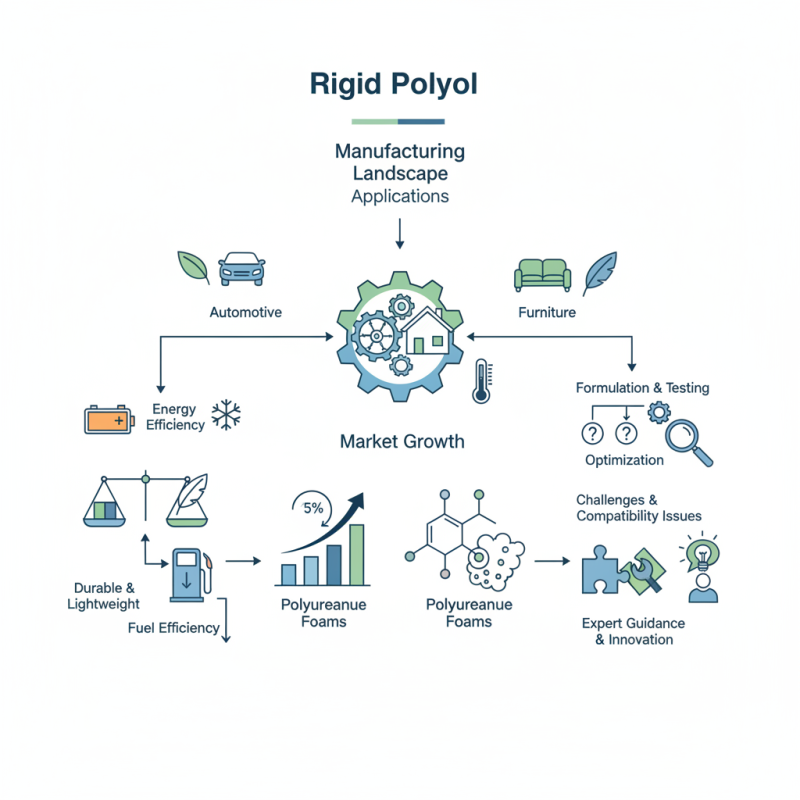
Understanding Rigid Polyol applications is crucial in today's manufacturing landscape. Rigid polyol is a key component in producing polyurethane foams, which are widely used in automotive, construction, and furniture industries. According to a recent report by MarketsandMarkets, the rigid polyol market is projected to reach USD 6.4 billion by 2026, growing at a CAGR of 4.67%. This growth is driven by increasing demand for sustainable materials and energy-efficient solutions.
With the rising focus on energy conservation, rigid polyols offer excellent thermal insulation properties. They help manufacturers create products that are both durable and lightweight. For example, in the automotive sector, using rigid polyol-based foams can lead to significant weight reductions, enhancing fuel efficiency. However, companies need to carefully evaluate their formulations. Not all rigid polyols perform equally under different conditions. This necessitates thorough testing and optimization for specific applications.
Despite the promise of rigid polyols, challenges remain. Some manufacturers still struggle with process adjustments and material compatibility. These issues can lead to inconsistencies in product quality. Hence, seeking expert guidance can be beneficial in making informed decisions. Investing time in understanding rigid polyol applications can yield significant dividends, pushing innovation further in multiple industries.
Overview of Rigid Polyols and Their Properties
Rigid polyols are essential components in the production of rigid polyurethane foams. These materials possess unique properties that make them ideal for various applications. They are known for their excellent thermal insulation and low-density profiles. This combination allows for significant energy savings in building and construction projects.
In terms of their chemical structure, rigid polyols are often formulated from renewable resources. This gives them an edge in sustainability. However, adapting to these properties can be challenging. The balance between flexibility and rigidity may require careful consideration. Users often find it’s not always straightforward to navigate these properties effectively.
Mechanical strength is another vital aspect. Rigid polyols typically feature high compressive strength, which is important for load-bearing applications. Yet, achieving the desired strength may not come easily. Trial and error may be necessary to find the right formulation. Remember, the interactions between various components can be complex. Understanding these relationships is key to mastering rigid polyols.
Common Applications of Rigid Polyols in Modern Industries
Rigid polyols play a significant role in various industries. From construction to automotive, their applications are diverse. These substances provide excellent insulation properties, often found in polyurethane foams, which help reduce energy consumption. In buildings, rigid polyols contribute to thermal efficiency. This makes homes more comfortable and reduces utility costs.
In the automotive sector, rigid polyols improve vehicle safety and comfort. They are used in seat cushions and soundproofing materials. However, the production of rigid polyols can result in environmental challenges. Sustainability is an ongoing concern. Many companies are exploring eco-friendly alternatives. Yet, the transition is not always seamless. Balancing performance and environmental impact requires careful consideration.
In the furniture industry, rigid polyols create durable and lightweight products. This helps manufacturers produce items that are easy to handle. But, not all applications yield perfect results. Some furniture pieces may lack stability or increase manufacturing costs. Continuous innovation is vital for addressing these shortcomings. The landscape of rigid polyol applications is evolving, and so are the challenges.
Advantages and Disadvantages of Using Rigid Polyols
Rigid polyols are essential in various industrial applications. They offer unique advantages but also present certain challenges. One notable report indicated that the global rigid polyol market is projected to grow by 5.3% annually until 2025. This growth is fueled by the increasing demand for insulators and lightweight materials in construction.
Using rigid polyols contributes to energy-efficient products. They help create strong, durable materials that withstand environmental stress. However, there are disadvantages. For instance, rigid polyols may have higher production costs. Moreover, their environmental impact is a significant concern, especially regarding their degradation. Awareness of these factors is crucial for manufacturers.
Tips for effective usage include selecting the right formulations based on the application. Testing different types of rigid polyols can optimize performance. It is advisable to collaborate with skilled professionals in the field to assess long-term effects. Balancing cost with sustainability is vital. As the industry evolves, staying informed will guide better decisions.
Processing Techniques for Rigid Polyol Production
Rigid polyols play a crucial role in various applications, especially in the production of rigid polyurethane foams. Understanding processing techniques is key to optimizing their use. One common method involves high-pressure mixing. In this process, components are combined under pressure to create a uniform blend. The equipment must be calibrated correctly to avoid inconsistencies.
Reaction temperature is vital too. It can affect the properties of the final product. Higher temperatures may increase reaction rates but can also lead to unwanted side effects. Maintaining an optimal temperature range helps in achieving the desired material characteristics. Sometimes, mistakes happen during this stage. For example, using an incorrect catalyst can change the foam's rigidity.
Another technique is the use of additives. These can enhance performance but require careful consideration. Some additives might not be compatible with certain formulations. This may result in a subpar product. Understanding the interactions between different ingredients is essential. It's not always perfect; trial and error is often necessary. Inconsistent results can lead to delays in production and additional costs. It’s important to reflect on these challenges to improve the process continuously.
Future Trends and Innovations in Rigid Polyol Applications
The future of rigid polyol applications is bright and filled with potential. Innovations in formulation technology are leading to superior thermal insulation properties. This presents opportunities, especially in the construction industry. Enhanced energy efficiency is a key focus, driving demand for advanced materials.
Biodegradable options are gaining traction as well. Consumers seek sustainable solutions. Many rigid polyol manufacturers experiment with renewable resources. However, the transition to greener alternatives isn’t always seamless. Challenges in production efficiency often arise.
New applications are emerging in sectors like automotive and refrigeration. Lightweight materials are becoming a priority, reducing vehicle weight for better fuel efficiency. The shift towards electric vehicles is another driving force. Rigid polyols can provide solutions here too. Yet, balancing performance and sustainability remains a significant hurdle. How can the industry address this gap? This question requires ongoing dialogue and innovation.
Essential Tips for Understanding Rigid Polyol Applications
| Application Area | Key Benefits | Future Trends | Innovations |
| Construction | High thermal insulation | Sustainability practices | Bio-based rigid polyols |
| Automotive | Weight reduction | Electric vehicle insulation | Enhanced mechanical properties |
| Appliances | Energy efficiency | Smart home technology | Integration with IoT |
| Packaging | Lightweight solutions | Recyclable materials | Smart packaging innovations |