Choosing the China Top 10 Mechanical Flange Manufacturers requires more than checking factory size or website rankings. A reliable supplier must demonstrate practical manufacturing experience, stable quality control, and clear technical communication. This overview examines manufacturers through engineering capability, production equipment, material traceability, inspection procedures, and export experience. Mechanical Flange performance depends on details that are easy to overlook, including bolt-hole accuracy, sealing-face finish, heat treatment, and dimensional consistency. Small errors matter.
The evaluation also considers recognized standards, such as ASME, ANSI, DIN, EN, and JIS requirements, when applicable to the project. Strong manufacturers usually provide material certificates, inspection reports, pressure-testing records, and documented quality systems. Their workshops may include CNC lathes, coordinate measuring machines, spectrometers, and controlled inspection areas. These details reveal more than polished marketing language. Ask for evidence.
However, no ranking can fit every buyer. A supplier suitable for oil and gas projects may not suit food processing, shipbuilding, or general industrial maintenance. Buyers should confirm material grades, pressure classes, dimensions, coatings, minimum order quantities, and delivery schedules before making decisions. Factory audits and sample inspections remain valuable, even when certificates appear complete. This guide offers a practical starting point, not an unquestionable verdict. Some information may change as manufacturers expand equipment, update certifications, or enter new markets. Careful verification is still necessary.
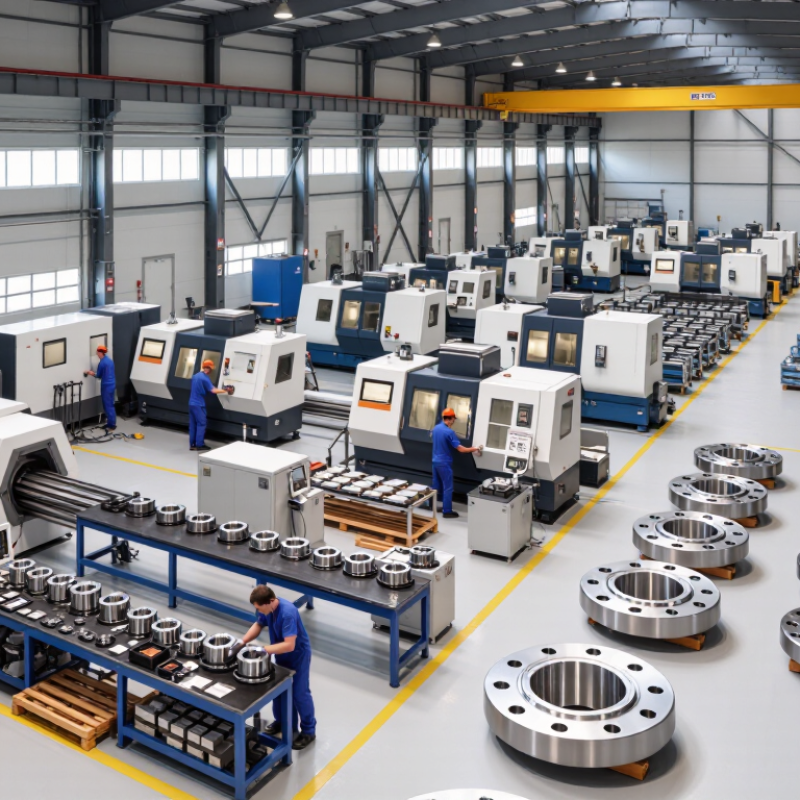
Mechanical flanges are precision-made components that connect pipes, valves, pumps, and pressure equipment. They create a removable joint for inspection, cleaning, or replacement. A flange normally uses bolts, nuts, and a gasket to control leakage.
Common types include weld neck, slip-on, blind, socket weld, threaded, and lap joint flanges. Weld neck designs suit high-pressure systems because their tapered hubs distribute stress. Blind flanges close open pipe ends. Slip-on models are easier to install, but they may offer less fatigue resistance in demanding service.
Industrial applications include water treatment, chemical processing, power generation, shipbuilding, and oil and gas facilities. Material selection depends on pressure, temperature, fluid chemistry, and corrosion risk. Carbon steel may suit ordinary services, while stainless steel performs better in corrosive environments. Dimensions must match the pipe schedule and the selected pressure class. A small mismatch can damage the gasket or distort the joint. It happens more often than expected.
Tips: Check the flange standard, face type, bolt pattern, and material certificate before installation. Inspect sealing surfaces for scratches, rust, or uneven machining. Use a calibrated torque wrench and follow a controlled tightening sequence. Do not rely on appearance alone. Chinese manufacturers may offer different production controls, so buyers should review inspection records, heat numbers, and pressure-test data. An experienced engineer should confirm the design for each service condition. Misjudging thermal expansion remains a common and costly mistake.

China Top 10 Mechanical Flange Manufacturers?
China’s mechanical flange manufacturing landscape is broader than a simple ranking. Around the top ten, suppliers often specialize in forged, cast, threaded, or custom flanges. Their workshops serve oil and gas, shipbuilding, chemical processing, water treatment, and heavy machinery projects. A serious evaluation begins with material control. Common grades include carbon steel, stainless steel, alloy steel, and duplex steel. Buyers should request heat numbers, chemical reports, hardness results, and dimensional records. Small details matter. A flange may look accurate but fail after repeated pressure cycles. Experienced engineers also inspect forging ratios, grain flow, surface finish, and bolt-hole alignment. These checks reveal more than catalog photographs.
Manufacturing capability varies across regions and factory sizes. Larger facilities may offer CNC turning, ultrasonic testing, pressure testing, and automated marking. Smaller specialists can respond faster to unusual dimensions, yet their documentation may be less consistent. That is a practical weakness, not an automatic rejection. During supplier audits, review calibration certificates, welding procedures, traceability systems, and corrective-action records. Ask how nonconforming parts are isolated. Ask for recent inspection samples. Reliable producers explain tolerances clearly and admit where capacity is limited. Delivery performance also deserves attention; export packaging, moisture protection, and wooden-case strength can affect arrival condition. In my experience, the lowest quotation rarely reflects the full purchasing risk. Freight, retesting, machining corrections, and delayed installation can change the final cost. Some rankings look impressive, but they may rely on outdated data. Buyers should verify current equipment, certifications, production capacity, and references before choosing among China’s leading mechanical flange manufacturers.
China Top 10 Mechanical Flange Manufacturers?
A credible top-ten list should measure evidence, not advertising. Start with dimensional accuracy, material control, and pressure performance. Manufacturers should provide heat numbers, inspection records, and EN 10204 3.1 certificates. Their products should match ASME B16.5, ASME B16.47, or relevant EN standards. Traceability matters.
The ISO Survey 2022 reported more than one million ISO 9001 certificates in China. This shows broad management-system adoption, but certification alone proves little. Auditors should examine calibration records, nonconformance reports, and corrective actions. A reliable factory can explain how it controls sealing faces, bolt holes, and flange thickness. Independent testing is valuable, especially for alloy steel and high-pressure applications. Numbers can mislead.
Capacity should be checked against real delivery performance. The World Steel Association’s World Steel in Figures 2024 reported China produced about 1.02 billion tonnes of crude steel in 2023. That scale supports strong material access, but it does not guarantee stable flange quality. Buyers should compare batch consistency, export packaging, lead times, and after-sales response. Factory visits can reveal crowded storage areas or incomplete identification tags. I would also review at least three recent customer references. A ranking may still miss hidden weaknesses. Recheck the evidence before signing.
| No. | Evaluation Dimension | Weight | Objective Data to Verify | Recommended Benchmark | Relevant Standard or Reference | Why It Matters |
|---|---|---|---|---|---|---|
| 1 | Applicable Product Standards | 15% | Published manufacturing scope, dimensional drawings, pressure classes, facing types, nominal sizes and tolerance controls. | Clear compliance with the standards specified in the purchase order; product scope should match the required size and pressure range. | ASME B16.5, ASME B16.47, EN 1092-1, JIS B 2220, DIN flange specifications. | Standard conformity supports interchangeability, installation accuracy and safe pressure service. |
| 2 | Material Traceability and Certification | 14% | Heat number, material grade, chemical composition, mechanical properties and signed mill test certificate for each production batch. | Complete traceability from raw material to finished flange, supported by EN 10204 Type 3.1 documentation when required. | ASTM A105, ASTM A182, ASTM A350 LF2, EN 10204 Type 3.1. | Traceability helps confirm material suitability and simplifies quality investigations or regulatory audits. |
| 3 | Forging and Heat-Treatment Capability | 13% | Forging process description, furnace records, normalizing, quenching, tempering, solution annealing or other required heat-treatment records. | Documented process controls with calibrated temperature monitoring and batch-based heat-treatment records. | Material specification requirements and applicable ASME, ASTM, EN or project specifications. | Controlled forging and heat treatment influence grain structure, strength, toughness and service reliability. |
| 4 | Dimensional and Surface Quality | 11% | Inspection reports covering outside diameter, bolt-hole spacing, bore, thickness, flatness, facing finish and visual defects. | Measured dimensions remain within the tolerances required by the applicable flange standard and approved drawing. | ASME B16.5, ASME B16.47, EN 1092-1 and approved engineering drawings. | Dimensional accuracy reduces assembly problems, leakage risk and installation delays. |
| 5 | Non-Destructive Testing Capability | 10% | Availability of ultrasonic testing, magnetic-particle testing, dye-penetrant testing, radiographic testing and qualified inspection personnel. | NDT method, sampling level and acceptance criteria are defined before production and recorded in inspection documentation. | ASME Section V, ASTM E709, ASTM E1417, ASTM E213 and project-specific requirements. | NDT can identify surface or internal discontinuities that may not be visible during routine inspection. |
| 6 | Quality Management System | 10% | Quality manual, inspection and test plans, nonconformance procedures, corrective-action records and calibration registers. | An independently certified ISO 9001 quality management system with evidence of active implementation. | ISO 9001:2015 and customer-approved quality plans. | A controlled quality system provides repeatable processes and measurable corrective actions. |
| 7 | Production Capacity and Delivery Control | 9% | Monthly production capacity, available forging equipment, machining resources, lead-time history and on-time delivery records. | Capacity is demonstrated against the required order quantity, size range and delivery schedule rather than stated only as a sales claim. | Purchase order requirements, production schedules and documented delivery performance. | Reliable capacity and planning reduce supply interruptions for maintenance and project procurement. |
| 8 | Inspection Equipment and Calibration | 7% | Equipment list for coordinate measurement, dimensional measurement, hardness testing, surface-finish testing and pressure-related checks where applicable. | Critical instruments have valid calibration certificates traceable to recognized national or international measurement standards. | ISO 10012 and customer calibration requirements. | Calibrated equipment improves the reliability and repeatability of inspection results. |
| 9 | Packaging, Marking and Export Documentation | 6% | Heat-number marking, size and pressure-class identification, corrosion protection, packing method, packing list and shipping documents. | Every package is clearly identified and protected against impact, moisture, contamination and flange-face damage. | Purchase order instructions, export documentation requirements and applicable packaging specifications. | Proper identification and packaging prevent mix-ups and damage during storage or international transport. |
| 10 | Environmental, Safety and Compliance Practices | 5% | Environmental permits, occupational safety procedures, waste-control records and evidence of responsible manufacturing practices. | Documented compliance with applicable Chinese laws and, where relevant, independently certified ISO 14001 and ISO 45001 systems. | ISO 14001:2015, ISO 45001:2018 and applicable local regulatory requirements. | Responsible operations reduce compliance, safety and supply-chain risks for international buyers. |
China’s top 10 mechanical flange manufacturers are usually judged by more than production volume. Reliable suppliers show stable machining accuracy, clear material records, and repeatable inspection results. In practical sourcing work, I check forging quality, bolt-hole alignment, sealing-face finish, and dimensional reports. These details matter when a flange meets pumps, valves, or high-pressure piping.
The strongest ten manufacturers typically offer carbon steel, stainless steel, alloy steel, and customized mechanical flanges. Their workshops often use CNC lathes, coordinate measuring machines, and pressure-testing equipment. Good manufacturers also explain tolerance limits before quoting. That builds trust. Some provide heat-treatment records, mill certificates, and traceability codes for each batch. However, factory size alone proves little. A large workshop may still deliver inconsistent surface finishes. This is where supplier audits and sample orders become useful.
Experience has taught me to inspect packaging, not only products. Damaged flange faces can create installation problems after a long shipment. Communication matters too. A dependable technical team answers drawing questions clearly and admits limitations. Not every supplier handles unusual dimensions well. That is acceptable, if stated early. Buyers should compare lead time, inspection depth, machining capability, and after-sales response. The final ranking should reflect verified performance, not attractive catalog language. Small gaps remain in public data, so independent testing is still wise.
The chart presents standard nominal pressure classes commonly specified for industrial mechanical flanges under EN 1092-1. The values are shown in bar and describe pressure-rating coverage rather than company-specific performance or sales data.
China Top 10 Mechanical Flange Manufacturers?
Comparing China’s top mechanical flange manufacturers requires more than checking price lists. Experienced buyers inspect material certificates, forging records, machining tolerances, and pressure-test reports. Common standards include ASME B16.5, EN 1092-1, and relevant GB/T specifications. However, standard labels alone prove little. A reliable manufacturer should match markings, dimensions, and heat numbers with inspection documents. Ask for sample reports.
Quality becomes visible during production. Skilled factories use controlled forging temperatures, calibrated CNC equipment, and surface inspections. A flange may look acceptable yet fail at the sealing face. Small scratches matter. Buyers should review ultrasonic testing, hardness results, and coating controls when the application demands them. Some suppliers provide excellent documents but weak traceability. That gap deserves attention.
Customization is another practical difference. Strong manufacturers can adjust bore dimensions, bolt-hole patterns, wall thickness, facing types, and materials without losing control of tolerances. They should confirm drawings before production. Delivery capability also needs evidence. Check raw-material availability, monthly capacity, packaging methods, and previous export schedules. A promised seven-day shipment may exclude testing or documentation. That is easy to miss. In my experience, the most dependable evaluation combines factory audits, third-party inspection, trial orders, and direct technical communication. No ranking stays perfect. Project conditions change, and even a capable supplier may not suit every flange specification.


All of Hapco's formulations are completely free of Mercury.

Hapco has been in business for over 50 years!

*NOTICE* Hapco will be will be closed on Monday, May 26th, in observance of Memorial Day. |
| Cookie | Duration | Description |
|---|---|---|
| cookielawinfo-checkbox-analytics | 11 months | This cookie is set by GDPR Cookie Consent plugin. The cookie is used to store the user consent for the cookies in the category "Analytics". |
| cookielawinfo-checkbox-functional | 11 months | The cookie is set by GDPR cookie consent to record the user consent for the cookies in the category "Functional". |
| cookielawinfo-checkbox-necessary | 11 months | This cookie is set by GDPR Cookie Consent plugin. The cookies is used to store the user consent for the cookies in the category "Necessary". |
| cookielawinfo-checkbox-others | 11 months | This cookie is set by GDPR Cookie Consent plugin. The cookie is used to store the user consent for the cookies in the category "Other. |
| cookielawinfo-checkbox-performance | 11 months | This cookie is set by GDPR Cookie Consent plugin. The cookie is used to store the user consent for the cookies in the category "Performance". |
| viewed_cookie_policy | 11 months | The cookie is set by the GDPR Cookie Consent plugin and is used to store whether or not user has consented to the use of cookies. It does not store any personal data. |