Choosing among the 2026 top Rod Breakdown Machine types requires more than comparing speed figures. Copper and aluminum producers must examine output stability, energy use, die life, maintenance access, and final wire quality. A machine that looks impressive in a brochure may perform differently on a busy factory floor.
This guide introduces the main machine categories expected to attract attention in 2026. They include single-wire breakdown machines, multi-wire systems, tandem designs, and high-speed lines with integrated cooling or inline annealing. Each type serves a different production strategy. Single-wire models can offer flexible size changes and simpler control. Multi-wire machines may deliver higher output when demand remains steady. Tandem systems can reduce handling between drawing stages. High-speed equipment may improve productivity, but it also requires precise lubrication, strong process monitoring, and experienced operators.
Small details matter. A worn die can leave scratches within minutes. Poor cooling can change conductor resistance. Vibration may reveal alignment problems before product defects become obvious. These practical observations often matter more than a maximum-speed claim.
No machine is perfect.
Reliable selection should combine manufacturer specifications, verified plant references, service response, and total operating cost. Buyers should also check motor efficiency, automation compatibility, spare-part availability, and safety functions. Independent testing is valuable when claims seem unusually optimistic. Some emerging designs may promise lower energy consumption, yet their long-term maintenance records remain limited. That uncertainty deserves attention. This overview therefore focuses on realistic performance, practical trade-offs, and the evidence needed to choose a dependable Rod Breakdown Machine for modern wire production.
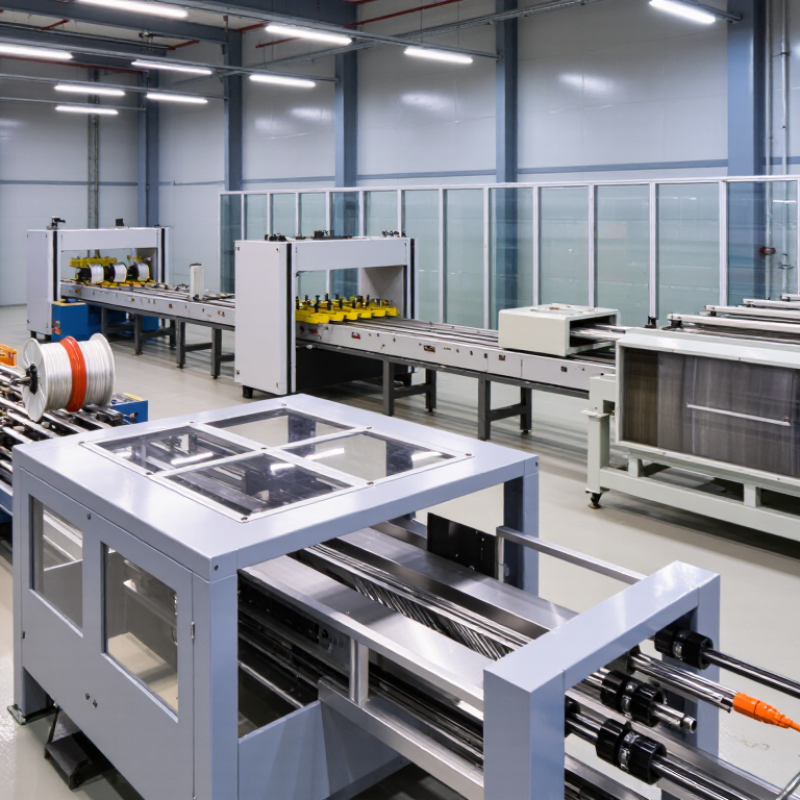
Rod breakdown machines convert copper or aluminum rod into precise wire for cables, motors, transformers, and electrical components. Their core role is controlled reduction. A typical machine guides an 8-millimeter rod through several carbide dies, reducing its diameter while maintaining roundness and surface quality. Cooling, lubrication, capstan tension, and inline measurement strongly affect the final result.
The main 2026 machine types include single-wire, multi-wire, slip-type, and non-slip designs. Single-wire machines suit flexible production and frequent size changes. Multi-wire systems produce several wires simultaneously, improving output per square meter. Slip-type machines manage speed differences between capstans through controlled sliding. Non-slip designs reduce wire movement, which can improve dimensional stability during demanding runs. The International Copper Study Group’s 2024 outlook placed global refined copper usage near 27 million metric tons in 2025. Meanwhile, the International Energy Agency identifies copper as essential for grids, electric vehicles, and renewable power equipment. Demand pressure makes stable rod processing increasingly important.
Tips: Check die wear, lubricant temperature, and capstan synchronization every shift. Higher speed is not always better. Operators should compare output with breakage, energy use, and surface defects. A 2024 energy-efficiency assessment from the U.S. Department of Energy shows that motor-driven systems can benefit from improved control and maintenance. Still, factory conditions differ. A machine selected only by rated speed may disappoint when rod quality varies or changeovers become frequent.

Among the leading 2026 configurations, rod breakdown machines include single-wire, multi-wire, and fine-wire types. Their operating principle remains straightforward. A payoff reel unwinds the metal rod under controlled tension. Guide rollers center it before the first die. Lubricant cools contact surfaces and reduces scoring. The initial die removes a measured amount of material, rather than forcing the full reduction at once.
Each following die reduces the diameter again. Capstans pull the rod through the die line and maintain production speed. A dancer arm responds to tension changes. That small movement matters. Poor tension can create ovality, surface cracks, or uneven elongation. Fine-wire machines usually use more dies and tighter cooling control. Multi-wire machines divide production across parallel paths, improving output but making setup more demanding.
At the exit, a take-up unit winds the finished wire onto a spool. Sensors monitor diameter, temperature, speed, and break events. The control system can adjust speed, but it cannot repair worn dies. Operators still inspect lubricant color, vibration, and first-off samples. I have found that accurate die alignment can matter more than a larger motor. This is not universal. Hard alloys may require different reductions and cooling rates. A micrometer check at several coil points can reveal variation that automation misses. Safety guards, emergency stops, and maintenance records support dependable operation.
Top Rod Breakdown Machine Types for 2026
Rod breakdown machines in 2026 are becoming more specialized. Single-wire machines remain practical for flexible production and frequent material changes. They use controlled drawing passes to reduce copper or aluminum rod into smaller wire sizes. Their compact layout helps smaller plants save floor space. However, output can be limited when demand rises sharply.
Multi-block machines target high-volume production. Several drawing blocks work in sequence, reducing rod efficiently while maintaining stable tension. Modern versions often include servo-driven capstans, automatic die lubrication, and digital tension monitoring. These features can reduce surface damage and improve dimensional consistency. Inline cooling systems also protect the wire during continuous operation. Small details matter here. A poorly adjusted die can leave visible marks within minutes.
Integrated rod breakdown and annealing lines are another important type for 2026. They combine drawing, cooling, resistance annealing, and take-up processes in one coordinated system. This arrangement can reduce handling and support consistent electrical performance. It also demands careful maintenance, especially around cooling channels and contact components. Energy monitoring is increasingly useful because heating sections may influence operating costs.
Non-slip machines offer strong control for delicate or demanding conductors, while slip-type systems may provide a simpler and more economical setup. The best choice depends on rod material, target diameter, production speed, and required softness. There is no universal winner. Some factories may overestimate automation benefits before checking operator training and spare-part access. Real production trials remain essential.
| Machine Type | Typical Rod Materials | Typical Inlet Rod Diameter | Typical Finished Diameter | Typical Die Arrangement | Typical Line Speed | Typical Total Area Reduction | Primary Application | Key Operating Characteristic |
|---|---|---|---|---|---|---|---|---|
| Single-Block Bull-Block Rod Breakdown Machine | Copper, aluminum and selected copper alloys | 8–12 mm | 2.5–4.0 mm | One or two dies with a rotating capstan or bull block | 10–25 m/s | About 60–85% | General-purpose production and lower-to-medium output lines | Simple construction, relatively easy maintenance and flexible setup for different rod sizes |
| Tandem Multi-Die Rod Breakdown Machine | Copper, aluminum and copper-based conductors | 8–12 mm | 1.8–3.5 mm | Typically 4–8 dies arranged in a continuous drawing sequence | 15–30 m/s | About 75–90% | High-volume conductor production requiring stable dimensional control | Distributes reduction across several passes to improve productivity and surface consistency |
| Sliding-Die Rod Breakdown Machine | Primarily copper and aluminum rod | 8–12 mm | 1.5–3.0 mm | Multiple dies with controlled material slip between drawing stages | 15–35 m/s | About 80–92% | Continuous, high-speed wire and conductor manufacturing | Reduces tension accumulation and supports higher drawing speeds when lubrication and cooling are properly controlled |
| Non-Sliding Rod Breakdown Machine | Copper and aluminum rod for standard conductor grades | 8–12 mm | 2.0–4.0 mm | Dies arranged with synchronized capstan sections and limited interstage slip | 10–25 m/s | About 70–88% | Applications prioritizing straightforward operation and predictable tension | Uses a comparatively direct material path and can be suitable for robust, repeatable production schedules |
| Multi-Wire Rod Breakdown Machine | Mostly copper and aluminum rod | 8–12 mm per feed rod | 1.0–2.5 mm per wire | Several parallel drawing paths, commonly 2–8 wires | 10–30 m/s per wire | About 80–95% | Large-volume production of identical conductors | Increases output per production line but requires synchronized tension, lubrication and diameter control across all paths |
| Rod Breakdown Machine with Inline Continuous Annealing | Electrical copper and selected aluminum conductor grades | 8–12 mm | 1.5–4.0 mm | Multi-die drawing section followed by electrical resistance or induction annealing | 15–30 m/s | About 75–92% | Flexible conductors that require improved ductility after drawing | Combines drawing and heat treatment in one line, reducing separate handling and restoring material softness online |
| Heavy-Duty Aluminum Rod Breakdown Machine | Aluminum and aluminum alloy rod | 9.5–15 mm | 2.5–6.0 mm | Large-capacity multi-pass drawing system with enhanced cooling | 8–20 m/s | About 65–88% | Power cable, overhead conductor and aluminum wire production | Designed for higher material volume and heat removal because aluminum rod has a relatively large cross-section and high thermal sensitivity |
| Precision Rod Breakdown Machine for Fine Conductor Feedstock | High-conductivity copper and selected copper alloys | 6–10 mm | 0.8–2.0 mm | Several precision dies with advanced tension and lubrication control | 10–25 m/s | About 85–97% | Fine-wire, magnet-wire and specialized electrical conductor preparation | Emphasizes low diameter variation, surface quality and accurate control of final mechanical properties |
What Are the 2026 Top Rod Breakdown Machine Types
Rod breakdown machines differ mainly in pass design, die arrangement, and cooling method. Single-pass systems suit smaller production lines and simpler copper or aluminum rod sizes. They use less floor space and can reduce setup time. However, their output capacity remains limited. Multi-pass machines deliver higher throughput by reducing rod diameter gradually. They require stronger process control, especially when surface quality matters. Tandem designs can process continuously, but alignment errors may multiply quickly.
Capacity is only one measurement. Precision depends on die condition, capstan stability, lubrication, and tension control. A well-maintained machine may hold tighter diameter tolerances than a larger, poorly adjusted system. Inline laser gauges can detect small deviations before coils become unusable. Still, measurement equipment needs regular calibration. A perfect reading is not guaranteed.
Energy efficiency deserves closer attention. Modern drives can adjust motor speed during low-load periods, while closed-loop cooling systems reduce water and power waste. Multi-pass equipment may consume more total energy, yet produce more finished rod per hour. That comparison is easy to miss. In real plants, idle time, die replacement, and rejected material often influence energy use more than motor ratings. Operators should compare kilowatt-hours per finished ton, not brochure capacity alone. Some assumptions will fail during seasonal production changes.
Choosing a rod breakdown machine starts with the conductor, not the catalog. Three practical types dominate 2026 planning: single-wire, multi-wire, and aluminum-focused lines. Single-wire machines suit flexible schedules and frequent size changes. Multi-wire systems increase output when demand remains stable and rod quality is consistent. Slip-type capstans support controlled drawing, while non-slip designs can simplify operation. That trade-off matters.
The International Energy Agency’s Global Critical Minerals Outlook 2024 places global copper demand near 26 million tonnes in 2023. Its stated-policies scenario reaches roughly 31 million tonnes by 2035. This pressure favors productive equipment, but speed alone is not the answer.
Select the machine around annual tonnage, target diameters, rod chemistry, and required elongation.
For copper, test cooling control, die changes, capstan design, and tension stability. For aluminum, thermal expansion and surface sensitivity can alter die and lubricant requirements.
The International Aluminium Institute reported global primary aluminium production above 70 million tonnes in 2024, showing the scale of demand without proving every factory needs an aluminum line.
Request measured kWh per tonne, scrap rate, lubricant use, and changeover time. Do not accept brochure speed as production evidence.
Plant trials often reveal a less comfortable truth: the cheapest machine can become the costliest bottleneck.


All of Hapco's formulations are completely free of Mercury.

Hapco has been in business for over 50 years!

*NOTICE* Hapco will be will be closed on Monday, May 26th, in observance of Memorial Day. |
| Cookie | Duration | Description |
|---|---|---|
| cookielawinfo-checkbox-analytics | 11 months | This cookie is set by GDPR Cookie Consent plugin. The cookie is used to store the user consent for the cookies in the category "Analytics". |
| cookielawinfo-checkbox-functional | 11 months | The cookie is set by GDPR cookie consent to record the user consent for the cookies in the category "Functional". |
| cookielawinfo-checkbox-necessary | 11 months | This cookie is set by GDPR Cookie Consent plugin. The cookies is used to store the user consent for the cookies in the category "Necessary". |
| cookielawinfo-checkbox-others | 11 months | This cookie is set by GDPR Cookie Consent plugin. The cookie is used to store the user consent for the cookies in the category "Other. |
| cookielawinfo-checkbox-performance | 11 months | This cookie is set by GDPR Cookie Consent plugin. The cookie is used to store the user consent for the cookies in the category "Performance". |
| viewed_cookie_policy | 11 months | The cookie is set by the GDPR Cookie Consent plugin and is used to store whether or not user has consented to the use of cookies. It does not store any personal data. |