
Liquid Molding Monthly
How to Choose High Performance Urethanes for Your Needs?
Choosing High Performance Urethanes starts with the job the material must do, not a product label. A wheel rolling over concrete faces different demands from a seal exposed to oil, heat, or repeated compression. Small details matter. Load, impact, abrasion, temperature, moisture, and chemical contact can each change the right formulation. A component that performs well in a brochure may behave differently in a cramped assembly or during continuous operation.
Begin by defining operating conditions and likely failure points. Note the expected load, movement, service temperature, exposure time, and cleaning methods. Then compare relevant properties, such as hardness, tear strength, rebound, abrasion resistance, and compression set. No single grade excels at everything. A harder urethane may resist wear, yet transmit more vibration; a softer grade may absorb impact but deform under sustained load. That trade-off is easy to overlook.
Ask manufacturers for current technical data and clarify how specimens were tested. Confirm that the reported values match your application, since test methods and sample conditions affect comparisons. When possible, review field history or test a representative part under realistic conditions. Field tests help. They are not perfect. Check dimensions, tolerances, bonding needs, and production volume before choosing a custom compound. The first selection may not be the final one. Record what fails, where it fails, and after how much use; that evidence can guide a more reliable specification. A careful choice is practical, but it still involves judgment.
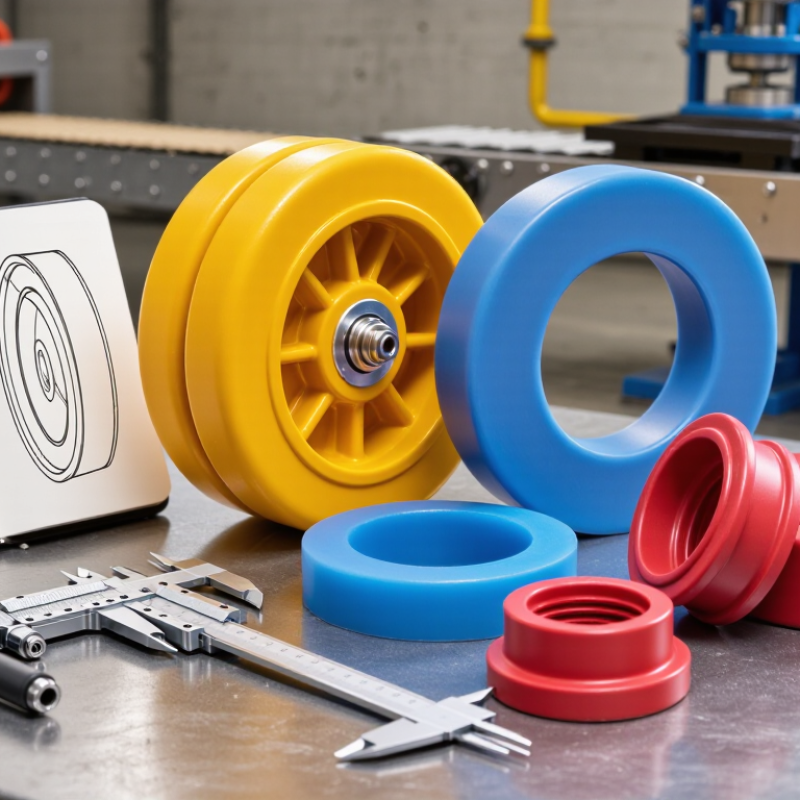
What High-Performance Urethanes Are and How They Differ
High-performance urethanes are polyurethane elastomers formulated for demanding wear, load, or environmental conditions. They can be designed for greater abrasion resistance, tear strength, flexibility, or resistance to oils and chemicals. No single formulation excels at everything. That matters. A urethane suited to a vibrating mount may not suit a sliding wheel or a seal exposed to cleaning fluids. Compared with general-purpose urethanes, high-performance grades target specific failure modes and may retain useful properties longer under those conditions. Actual results depend on the formulation, part design, and operating environment.
Tips: Write down the real conditions before choosing a material. Note the contact surface, load, movement, temperature range, and fluids present. Ask for test data that matches those conditions, such as abrasion or tear results. A number alone can mislead if the test method differs.
Consider how the part will be made and maintained, too. Hardness affects feel and deflection, but it does not describe every aspect of performance. A very hard grade may resist deformation yet transmit more vibration. If possible, test a sample in the actual assembly and inspect it after repeated use. It is easy to overlook an edge, fitting, or cleaning step during selection. I would revisit those details before settling on a grade.
| Urethane Type | How It Is Made or Supplied | Typical Strengths | Key Limitations | Common Applications | Best Fit When You Need |
|---|---|---|---|---|---|
| Polyether-based cast polyurethane | Liquid components are mixed, cast into a mold, and cured. The polyether segment is part of the polymer structure. | Generally strong resistance to hydrolysis and water exposure; good resilience and low-temperature flexibility; available in a broad range of hardnesses. | Resistance to certain oils, fuels, and solvents may be lower than with some polyester-based formulations. Performance depends on the exact formulation. | Wet-service rollers, marine components, seals, wheels, and parts exposed to repeated water contact. | Water or humidity resistance and flexibility are priorities. |
| Polyester-based cast polyurethane | Liquid components are cast and cured; polyester segments form part of the polymer structure. | Often offers high tensile strength, tear strength, and abrasion resistance. Can provide good resistance to oils and many hydrocarbons. | Typically more vulnerable to hydrolysis than polyether-based grades, especially in warm, wet conditions. Chemical compatibility must be checked for the specific fluid. | Industrial wheels, rollers, wear pads, scrapers, and components exposed to abrasive contact or oily environments. | Wear resistance and mechanical strength matter more than prolonged hot-water exposure. |
| Thermoplastic polyurethane (TPU) | Supplied as a thermoplastic material that can be melted and processed by methods such as extrusion or injection molding. | Consistent, repeatable processing; good abrasion and tear resistance; suitable for complex molded shapes, films, and extruded profiles. | Heat resistance under sustained load is formulation-dependent and may be lower than that of some crosslinked cast urethanes. Melt processing limits the size and geometry of some parts. | Hoses, cable jackets, belts, films, molded protective parts, and smaller production components. | Repeatable thermoplastic manufacturing or thin, complex, or continuous profiles are required. |
| Cast polyurethane elastomer | A family of cured urethane elastomers made by casting reactive components into a mold; formulations may use different polyol and isocyanate chemistries. | Can be tailored for large or thick parts, impact absorption, abrasion resistance, resilience, and a wide hardness range. | Properties vary substantially with chemistry, curing, and formulation. Production may require longer cure times than thermoplastic processing. | Large wheels, heavy-duty rollers, liners, impact components, and custom-shaped wear parts. | A custom geometry or a combination of toughness, resilience, and wear resistance is needed. |
| High-hardness polyurethane | A formulation designed toward the harder end of the elastomer range; available in cast or thermoplastic grades. | Can provide high load-bearing capacity, dimensional support, and resistance to cutting or deformation compared with softer grades. | Greater hardness usually reduces flexibility and may increase noise or impact transmission. Hardness alone does not predict wear life. | Load-bearing wheels, rollers, guides, and structural wear components. | Support under load and resistance to deformation are more important than soft cushioning. |
| Soft or cushioning polyurethane | A softer elastomer formulation, selected for flexibility and energy absorption; may be cast or thermoplastic. | Can absorb impact, conform to surfaces, and provide cushioning or grip. | May deform more under sustained loads and can wear or tear differently from harder grades. Check compression set and tear strength for the application. | Vibration isolators, bumpers, soft rollers, pads, and protective components. | Impact absorption, cushioning, or surface conformity is the primary goal. |
| Selection note | “High performance” is application-specific. Compare the exact grade’s hardness, abrasion and tear results, load and temperature limits, fluid compatibility, and test method. Typical properties are not guaranteed values; consult the supplier’s technical data for the intended operating conditions. | ||||
Related Posts
-

7 Compelling Reasons to Choose Polyurethane Casting for Your Next Project
-
7 Tips for Choosing the Right Polymer Material
-

The Amazing Benefits of Using Clear Epoxy for Your DIY Projects
-
What is Plastic Epoxy Resin and Why is it Important?
-

Unlocking the Advantages of High Performance Polymers for Enhanced Durability and Efficiency
-

2026 Best High Performance Polymers for Global Buyers?


100% Mercury Free
All of Hapco's formulations are completely free of Mercury.

50 Year Track Record
Hapco has been in business for over 50 years!